

Why is everyone interviewing everyone these days?

If you are like me, your media diet has become increasingly filled with interviews.
In the form of podcasts via Spotify. In the form of articles via Substack. In the form of clips via Reels / Tiktok. YouTube conversations that run for three hours between founders, athletes, CEOs, influencers, politicians, comedians; everyone interviewing everyone.
It got me thinking…
Why is everyone interviewing everyone?
What distinguishes a good interview from a bad interview?
What are interviews replacing?
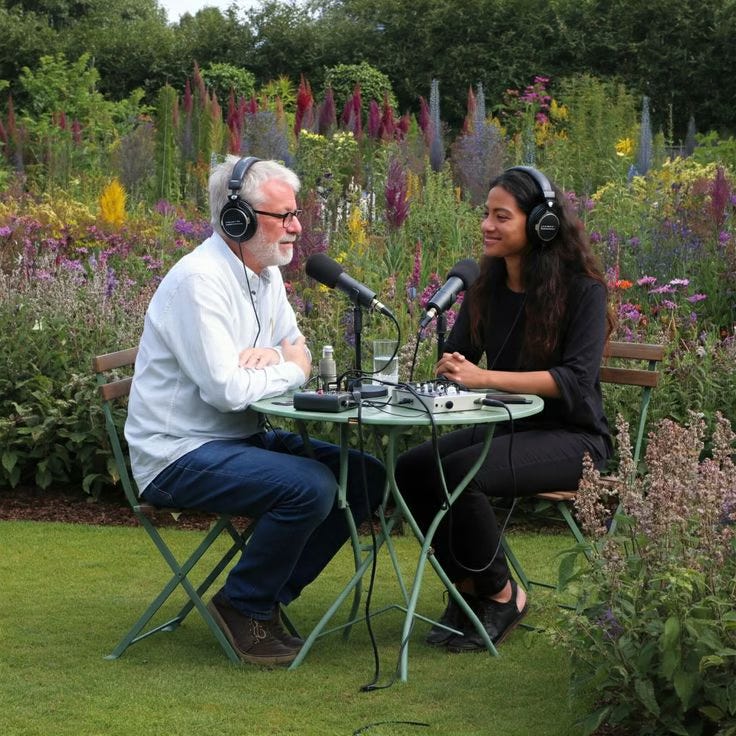
I think there are a few reasons why we are seeing interviews everywhere.
Firstly, it’s become incredibly easy and cheap to build a platform where interviews are the main format of content.
One of my favourite entrepreneurs, Naval Ravikant, is very famous for his framework on leverage. He breaks it down into four types: labor, capital, code, and media.
The first two are permissioned - you need someone’s approval.
The latter two are permissionless - anyone can use and deploy them.
The internet supercharged permissionless leverage.
Code and media scale infinitely, cost nothing to replicate, and compound faster than labor or capital ever could.
An interview is media you can make with two people and a microphone, and it's modular, meaning one conversation can be cut and edited into 10 different pieces of content. Having original, interesting ideas are among the most valuable things you can share with another person, and the interview is how you do this at scale.
Secondly, it’s because audiences prefer it.
We are watching, in real time, the transition from institutional media to interpersonal media. What I mean by that is that media has largely evolved from radio, television, magazines and newspapers to audiobooks, podcasts, YouTube, social media, Substack and websites.
For a hundred years, trust lived in the institution. You believed something because it ran in the New York Times, or you heard it on the BBC, or it made the cover of TIME magazine. The reporter rarely gained notoriety or fame.
Today, trust has migrated to individual voices and personalities. We care less about who they work for, and more about who they are and what they believe in.
Interviews build personal brand quickly, because you are essentially borrowing the other person’s credibility and audience.
A large part of personal brand used to be about who you knew. Your power was your private network, valuable precisely because it was exclusive and hidden. Now authority is measured differently: it’s not just who you know, but how many people know you. The interview is the mechanism that converts this. It takes private credibility (being good enough to be in the room) and turns it into public reach (being known by everyone watching it).
This works for both the interviewer, and the guest. A guest list is a status symbol. Jake Shane having Kylie Jenner on his podcast signals where he sits in the new media landscape. The host confers status by choosing the guest, and the guest confers status on the host by saying yes.
For many guests, interviews are the best way to promote something new, because they reach new audiences quickly, and because of the modular aspect of this content, it is far reaching.
That value exchange turns the interview into a trojan horse for access: the invite is a flattering, legitimate ask, and it manufactures a conversation no coffee ever could.
Where the old game rewarded keeping your network closed, the new one rewards opening it as wide as possible, for everyone to see.
Naturally, because of these two things, we are seeing a lot of interview content. This means that the better interviewers, the ones who are the most curious with a strong POV, win.
The real forcing function of any interview isn’t the guest; it’s the taste and judgment of whoever’s asking the questions. Good interviews occur when the interviewer is well-read, opinionated, willing to listen and learn, and are an inherently curious person. The Q&A format reveals how a person thinks, so a great interview happens when someone is curious in ways both similar and different to your way of thinking.
It’s one of Alex Cooper’s key pieces of criticism on her interview style, she has prioritised being polite over tough journalism. And it's a big reason people like Joe Rogan and Theo Vonn rose so fast: they have strong opinions and they'll push whether they're sitting across from a country singer or the President of the United States.
Audiences want primary sources of information, and a good interviewer knows how to tease real answers out. This is changing what the news itself looks like.
Ultimately, when a plane goes down or a war starts or a rate decision drops, you still go to the news. You trust them to tell you the thing happened. But you don't open the op-ed page to find out what to think about it. For that you go to your guy.
News and opinion were always two different businesses stapled together. Reporting is fixed-cost with high-overheads. Opinion is one person and a brain. It was always the highest-margin, lowest-cost item in the newsroom.
Smart writers have figured out that they can make more by publishing independently on Substack than taking a salary at a paper. And the interview is the perfect getaway car.
Even the news isn’t safe from disruption. The primary source - the eyewitness, the footage - is increasingly captured by whoever was standing there with a phone (the Analyst #3 ), not by a correspondent.
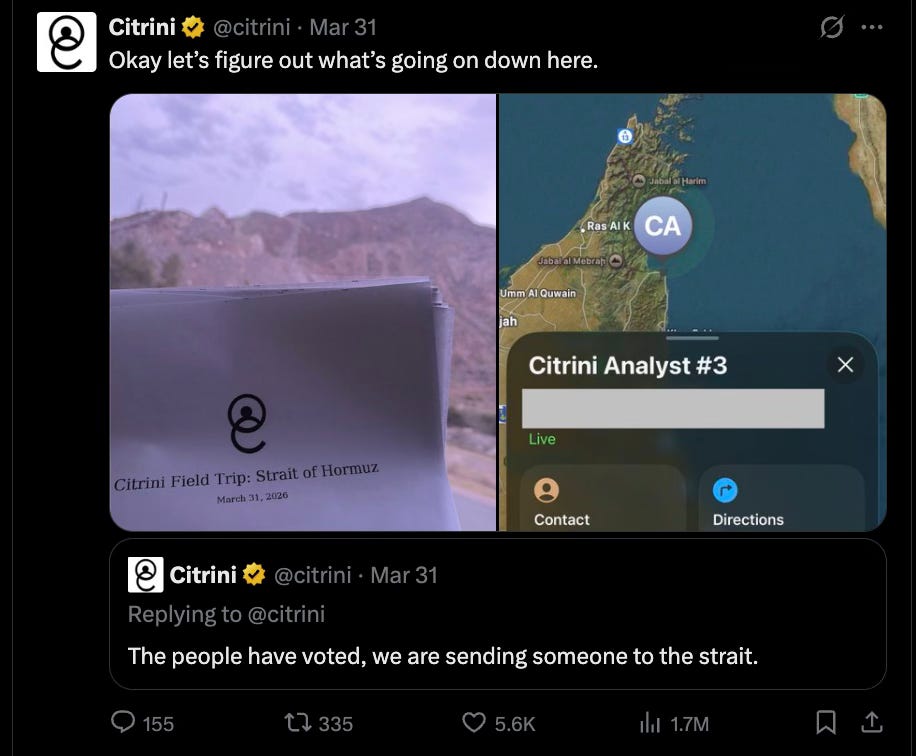
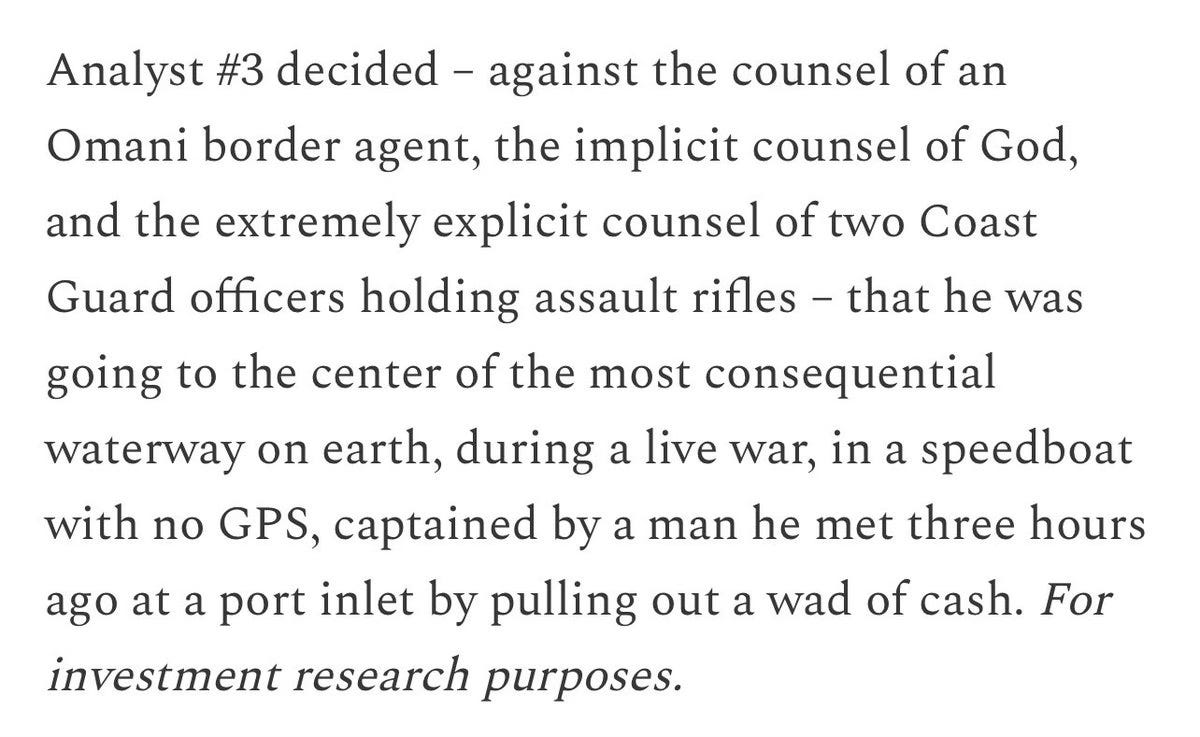

So what legacy media actually keeps isn't the scoop anymore. It's the "we checked this and we'll put our name on it" verification stamp. Trust at scale needs an institution behind it, and a single person can't credibly issue it themselves.
As storytelling migrates from the institution to the person, I think the interview becomes the backbone of new media. What do you think?